
How far ahead should I book porta potty rental?
A week to ten days is the safe window, longer if your event lands near a holiday or falls during peak construction season. Town 'n' Country sees demand spikes just like nearby Citrus Park, 6.1 miles north, so trucks book up fast. If you are still deciding on unit type, start with porta potty rental in Town 'n' Country, FL and work from there. For urgent needs, emergency porta potty rental can sometimes fill a same-week gap, but do not count on it as your plan A. Once you have a date, get pricing early through porta potty rental cost or porta potty rental per day so budget is not the thing holding up your delivery. Long projects should look at monthly porta potty rental instead of renewing weekly, since the per-day rate drops the longer you commit. If you are running a construction site rather than an event, pair this with the guide on construction site services for delivery timing that matches your other rentals like dumpsters or fencing.
How many units do I actually need?
OSHA 1926.51(c) sets the construction baseline: one toilet for 20 or fewer workers, then one toilet and one urinal per 40 workers as headcount climbs, and one per 50 once you pass 200 workers. That ratio is your starting math, not your final answer, because ANSI/PSAI Z4.3 assumes one service visit per week covers up to 10 users over a 40 hour week, and heavier use shortens that interval. Run your numbers through how many porta potties do I need before you call, and cross-check against OSHA portable toilet requirements if this is a jobsite. Events use a different curve entirely; a wedding or festival crowd cycles through units faster than a static crew does, so check event restroom rental or the more specific wedding restroom rental and festival restroom rental pages. Farms and agricultural operations fall under a separate standard, OSHA 1928.110, which requires field sanitation within a quarter mile walk of hand-labor employees; see farm and agricultural restrooms for that math.
Do I need an ADA unit?
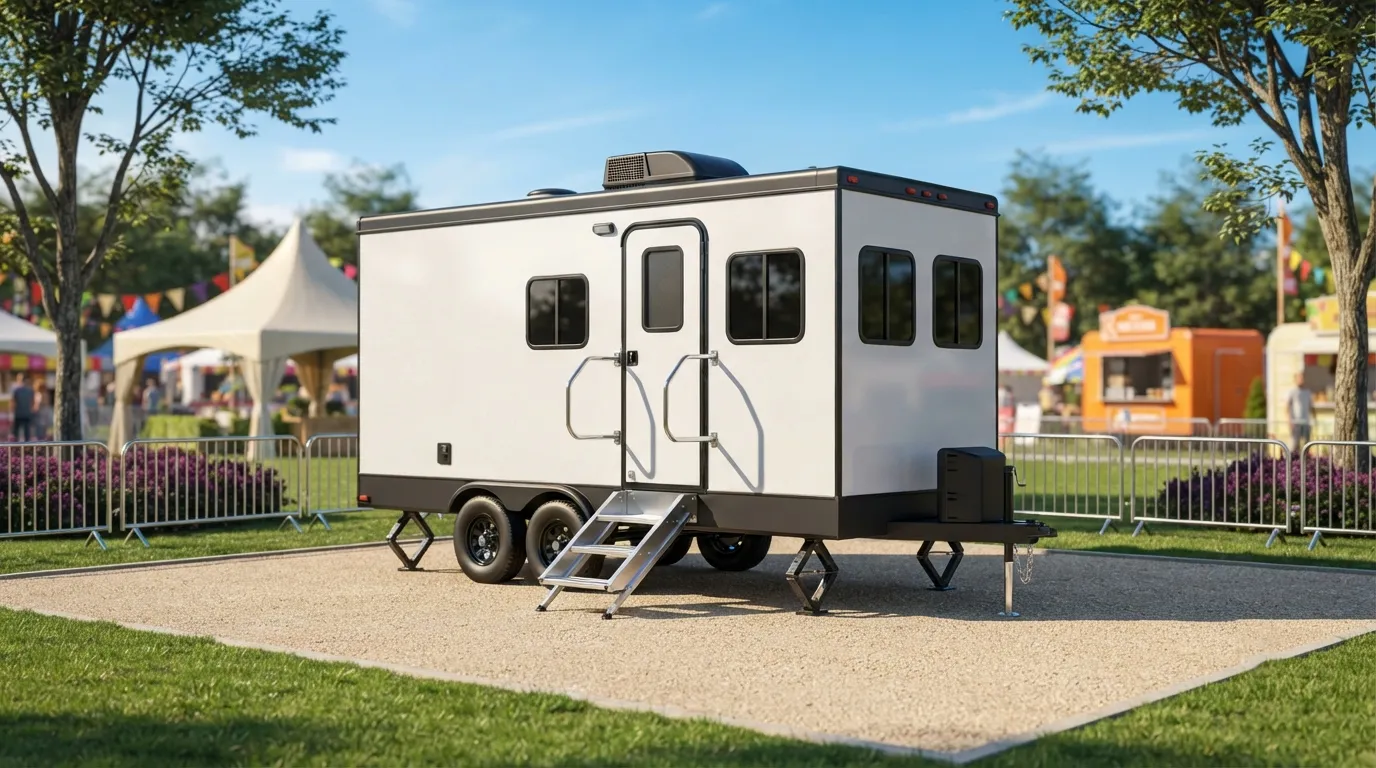
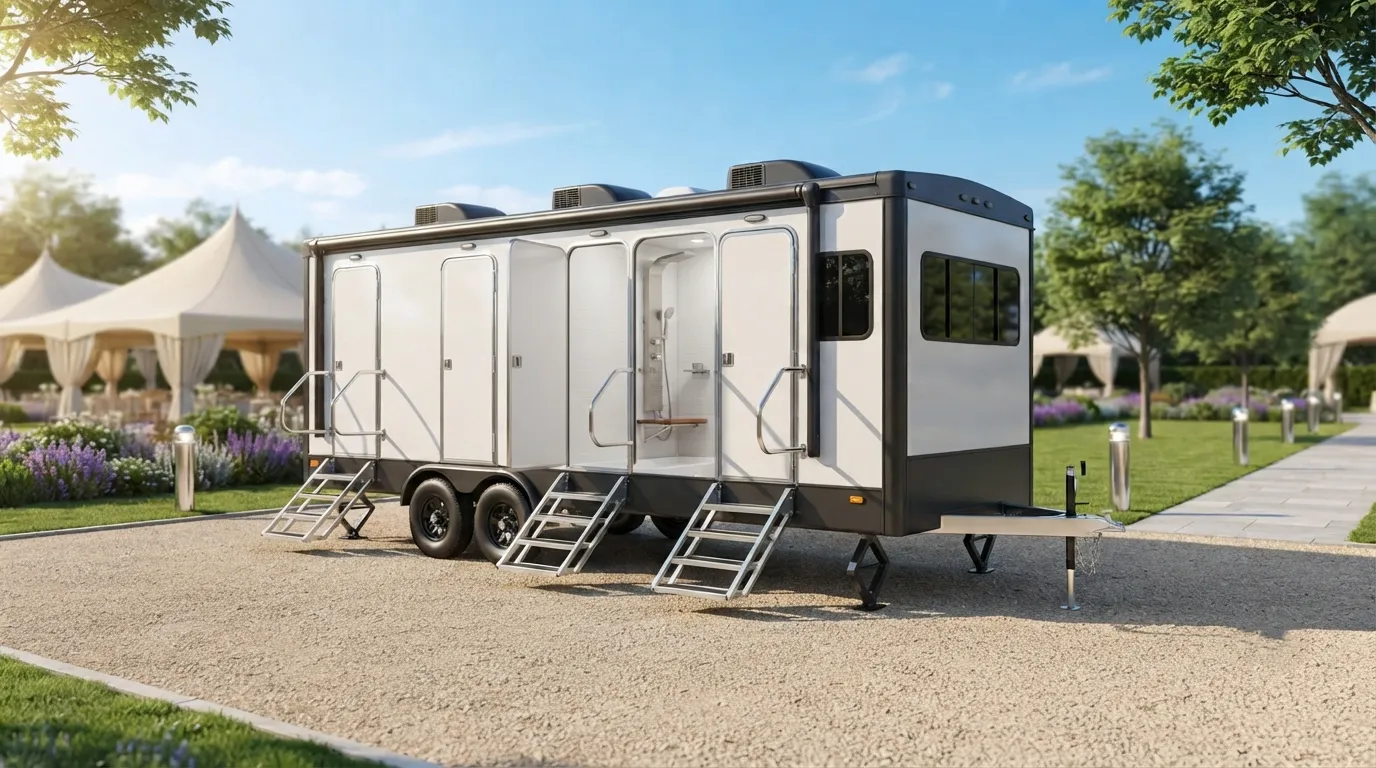
If you are clustering standard units for a public event or jobsite, ADA Standards section 213.2 requires at least 5 percent of the cluster to be accessible, and never fewer than one unit even for a small job. That single unit needs a 60 inch turning circle inside per ADA 304.3.1, a door opening of at least 32 inches per ADA 404.2.3, and a stable, slip-resistant floor surface per ADA 302.1. Check ADA accessible porta potty for what is included, and read ADA restroom requirements if you are planning a public-facing event in Town 'n' Country. Reach controls and door handles matter too: ADA 309.4 calls for operable parts that work with one hand and take no more than 5 pounds of force, and ADA 308.2.1 caps the forward reach at 48 inches high. If your event also needs multiple stalls in one enclosure, look at the 2 stall restroom trailer or 4 stall restroom trailer instead of a row of singles.
Where should the units go, and what about permits?
A standard unit runs about 44 by 48 inches on the ground and stands roughly 92 inches tall, so give it a flat pad with a few extra feet on each side for the service truck to work. Placement in the public right of way in Town 'n' Country needs confirming with the city before delivery day; do not assume a curb strip or road shoulder is fair game. Start with the porta potty placement guide for site prep basics, and read porta potty permit requirements before you finalize a location near a sidewalk or street. If your route to the pad is narrow, note that a roll-off delivery truck needs about 60 feet of straight clearance behind it, which is a useful gut-check even for a portable toilet delivery on a tight lot. Access matters for the whole path, not just the pad: ADA 403.5.1 sets a 36 inch minimum clear width for the route leading to an accessible unit.
Comparing your rental options
| unit | day | week | month |
|---|---|---|---|
| standard | $100-$350 | $130-$500 | $125-$325 |
| deluxe | $85-$1,200 | $150-$290 | - |
| ada | $200-$400 | $200-$400 | - |
A standard unit's weekend rate runs $125 to $400, useful if your event is Friday to Sunday and does not need a full week. Compare standard porta potty rental against the flushable option at deluxe flushable porta potty if your guests expect something closer to an indoor bathroom. For longer jobs, portable toilet rental and portable restroom rental cover the same ground with slightly different unit mixes, and porta john rental is the same product under an older name.
What is the difference between a standard unit and a deluxe unit?
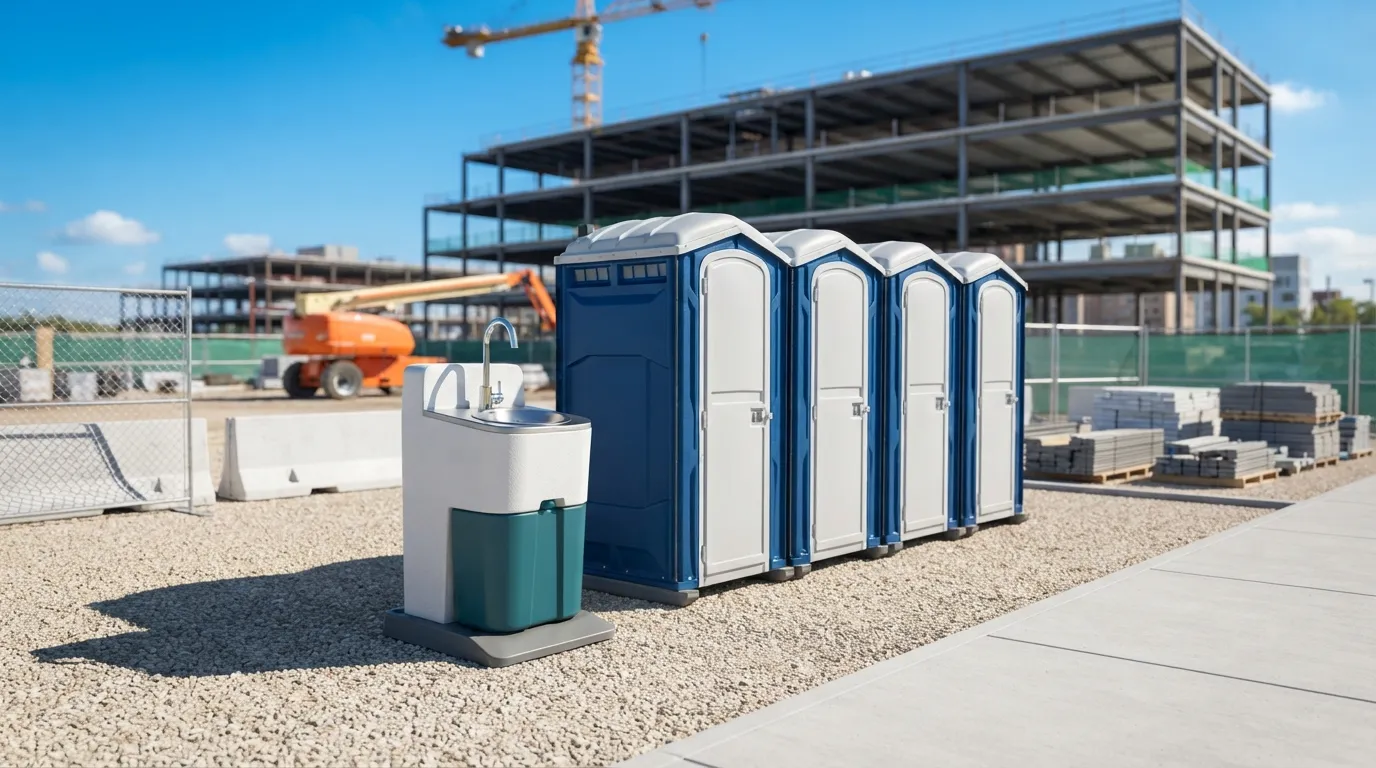
A standard unit is a basic single-stall toilet with a 60 to 70 gallon holding tank and no sink. A deluxe unit typically adds a flushing mechanism and sometimes a hand rinse station. See deluxe flushable porta potty for what is included before you upgrade.
Do I need a handwashing station too?
Handwashing is required where workers apply paints, coatings, herbicides or insecticides, per OSHA 1926.51(f)(1). Standalone handwashing units must have soap and towels or a dryer under 29 CFR 1910.141(d)(2), not just sanitizer. Check handwashing station rental or handwashing requirements.
Can I rent a porta potty for just one weekend?
Yes. Weekend rates exist separately from daily and weekly rates and often cost less than booking a full week for a two-day event. Confirm your dates early since weekend slots fill fast; see porta potty rental per day for the shorter-term math.
What cannot go in a porta potty?
Anything beyond normal human waste and toilet paper risks a service problem or an extra fee. Wipes, feminine products in bulk, and trash all clog the tank. Ask your delivery crew directly, since policies vary by unit type.
How often are units cleaned during a long rental?
Standard service follows roughly one visit per week per the ANSI/PSAI Z4.3 baseline for up to 10 users, though high-traffic sites need more frequent stops. See how often are porta potties cleaned for what affects that interval.
Next step
Get a delivery date
Tell us the address, the dates and the headcount. We size the order and confirm the route.